
Customer Retention Strategies for Small Businesses
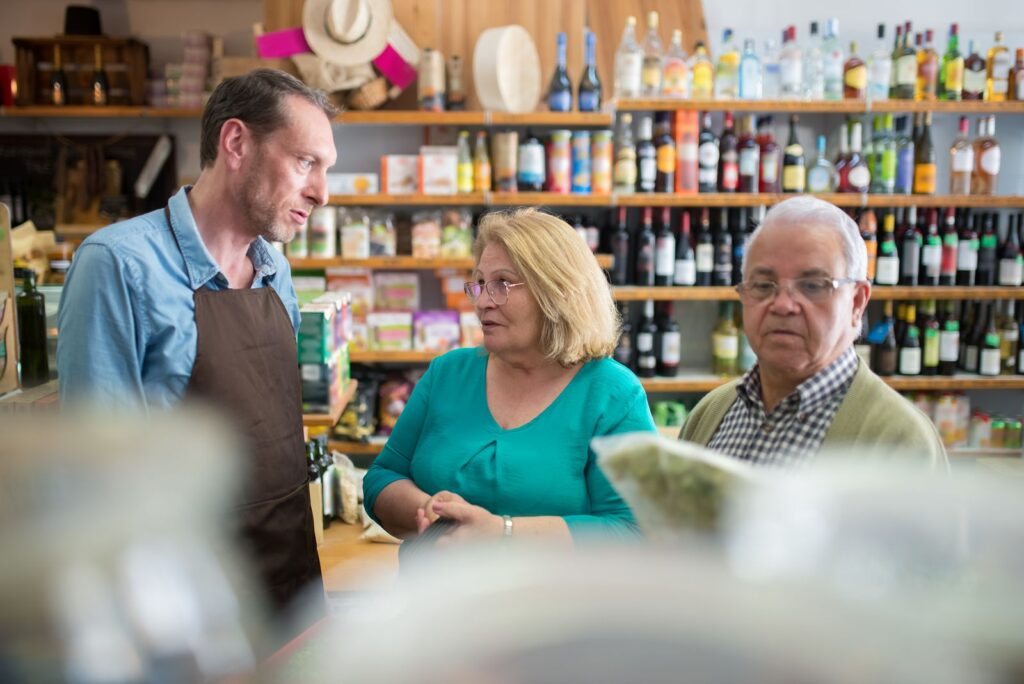
Most small businesses put their energy into finding new customers: ads, posts, flyers, specials. Far less goes into the people who already bought once and liked it. This guide covers customer retention strategies that suit a South African small business without a big budget or a CRM: how to measure where you stand, eight practical ways to bring people back, a 30-day plan and a win-back message you can adapt today.
If you’re specifically planning a stamp card, points or tiered rewards, read our loyalty program ideas for small businesses first. Loyalty rewards are one part of retention. This post is about everything around them.
Why keeping customers deserves its own plan
Repeat customers already know where you are, trust your quality and need less convincing. That makes them cheaper to sell to. A Harvard Business Review article notes that, depending on the study and industry, winning a new customer can cost five to 25 times more than keeping an existing one.
You don’t need to take that range as gospel for your shop. The practical point stands: every customer who drifts away has to be replaced before you can grow, and replacing them costs money.
Start by measuring your customer retention rate
You can’t improve what you don’t count. A common formula, set out by Zendesk, is:
Retention rate = ((customers at end of period − new customers gained in the period) ÷ customers at start of period) × 100
Worked example (hypothetical). Say a nail salon in Pretoria had 120 active clients on 1 August and 130 on 31 October, of which 30 were new. So (130 − 30) ÷ 120 × 100 = 83%. In other words, about 17% of August’s clients didn’t come back in those three months.
What counts as an “active customer” depends on your business. For a salon it might be “visited in the last 8 weeks”; for an online store, “ordered in the last 6 months”. Pick a definition that matches your normal buying cycle and keep it the same every time you measure.
No booking system? Use your till slips, invoice list, WhatsApp chats or a simple spreadsheet with name, contact, date of last purchase and what they bought. It’s rough, but it’s a start.
8 customer retention strategies that work for small businesses
1. Make the first 30 days count
Right after a first purchase, you have the customer’s attention and goodwill. Plan what happens next instead of leaving it to chance:
- Same day: a thank-you message (or a handwritten note in the parcel).
- Within a week: something useful, such as care instructions, how to get the best from the product, or aftercare tips.
- Around the normal repurchase point: a reminder or a friendly check-in.
2. Make coming back effortless
Remove the small frictions. Offer to book the next appointment before the client leaves. Keep a note of their usual order. Send a reminder when a consumable is likely to run out. Put your WhatsApp number, hours and booking link on every receipt, bag and invoice.
3. Stay in touch, with permission
People forget businesses they haven’t heard from. A monthly email or a WhatsApp update keeps you in mind, but in South Africa it must respect POPIA. Under section 69 of POPIA, you may send electronic direct marketing to an existing customer without separate consent only if you got their details during a sale, you’re marketing your own similar products, and you gave them a chance to opt out when you collected the details and in every message.
Our guide to email marketing in South Africa under POPIA covers setup in detail. If you want to build this skill properly, see our E-mail Marketing course.
4. Fix problems fast, and better than expected
A complaint is often the last thing a customer says before they leave quietly. Reply quickly, apologise without arguing, fix the problem and follow up to check it stayed fixed.
Know your baseline legal obligations too. Under section 56 of the Consumer Protection Act, a consumer can return defective goods within six months of delivery and choose a repair, replacement or refund. Meeting the law is the minimum. Going a little further, such as covering the courier both ways, is what customers remember.
5. Reward repeat visits, simply
A visible reward gives people a reason to choose you over the shop next door. For many small businesses a paper stamp card is enough. Our Mini Loyalty Card Stamp is a 12 mm pre-inked stamp made for stamp cards. The full options (stamps, points, tiers, surprise rewards) and the CPA rules for loyalty programmes are in our loyalty programme guide, so we won’t repeat them here.
6. Turn regulars into referrers
Your happiest customers are also your cheapest source of new ones. Give them something physical to pass on: a card with a discount for the friend and a thank-you reward for them when it’s used. Our Referral & Loyalty Discount Cards come in packs of 50 at business-card size. Write a code or the referrer’s name on each card so you can track who sent whom.
7. Ask for feedback, then act on it
Ask two questions after a purchase or visit: “What did you like?” and “What one thing should we improve?” Act on patterns, not single comments, and tell customers what you changed (“You asked for Saturday afternoon slots, so we’ve added them”). Happy customers can also be invited to leave a Google review; our guide on how to get Google reviews explains how to ask.
8. Win back customers who’ve gone quiet
Use the “active customer” definition from your retention rate. Anyone past it is lapsed. Once a month, pull that list and send a short, personal message. Ask whether everything was okay, mention what’s new and, if you like, include a modest reason to return. Note who replies and why people left. That feedback is valuable.
A 30-day retention plan
Week 1: measure
- Choose your “active customer” definition.
- Build a simple list: name, contact, last purchase date, what they bought, opt-out status.
- Work out your retention rate for the last quarter.
Week 2: fix the basics
- Write your thank-you and check-in messages.
- Add contact details and a booking or ordering link to receipts and packaging.
- Agree a complaint process: who replies, within how long, and what they can offer.
Week 3: reward and refer
- Launch or tidy up your stamp card.
- Print or order referral cards and brief your staff on handing them out.
Week 4: win back
- Send your first win-back message to lapsed customers.
- Record replies and reasons for leaving.
- Set a calendar reminder to recalculate your retention rate in three months.
Win-back message template
Adapt this for WhatsApp or email. Only send it to people you’re allowed to contact, and include an opt-out.
Hi [first name], it’s [your name] from [business]. We haven’t seen you since [month] and just wanted to check everything was okay with your last [service/order]. If anything wasn’t right, please tell me, I’d really like to know. We’ve also [one genuine update, e.g. added Saturday slots / restocked your favourite]. If you’d like to come back, [offer or simple next step, e.g. reply to book]. Reply STOP if you’d prefer not to hear from us.
Keep it personal, short and honest. A message that sounds like a mass blast gets treated like one.
Where to start
Don’t try all eight strategies at once. Measure your retention rate this week, then pick the two strategies that address your biggest leak: usually the first 30 days and staying in touch. If email is the gap, our E-mail Marketing course is a good next step.
Frequently asked questions
What is a good customer retention rate for a small business?
It depends on your industry and buying cycle. A hair salon, a hardware store and an online gift shop will all see very different numbers, so comparing yourself with a generic benchmark can mislead you. The most useful comparison is with your own past performance. Measure your rate the same way every quarter and aim to move it up steadily.
What is the difference between customer retention and customer loyalty?
Retention is behaviour you can measure: did the customer buy again within a set period? Loyalty is the attitude behind it: do they prefer you, and would they recommend you? A loyalty programme is one tool for retention. Good service, reminders, easy rebooking and fair complaint handling are others, and often matter more.
Can I send marketing messages to my existing customers in South Africa?
Yes, within POPIA’s rules. Under section 69, you can market your own similar products to existing customers whose details you got during a sale, provided you offered an opt-out when collecting their details and include one in every message. For anyone else, you generally need their consent first. Keep a record of opt-outs and honour them promptly.
How often should I contact past customers?
Often enough to stay remembered, not so often that you’re ignored. For most small businesses, one useful message a month plus timely reminders around repurchase dates works well. Watch your replies and opt-outs: if unsubscribes rise after a send, you’re contacting people too often or the message isn’t relevant enough.
Free weekly marketing tips
Get practical marketing ideas for South African small businesses
One short email a week: a tactic you can use, a tool worth trying, and what is working for local brands. No spam.


One Response